
The 8 Best vCISO Providers in the UAE (2026)
Most UAE companies meet the CISO question at a specific moment. A bank asks for your information security officer before it opens the account. An enterprise customer sends a 200-question security questionnaire. VARA or the DFSA wants a named owner for your security program. An investor's due diligence list includes ISO 27001 or SOC 2.
A full-time CISO in the UAE runs to roughly AED 85,000 to 120,000 a month fully loaded once salary, benefits, gratuity and visa costs land, and strong candidates are scarce; we break the maths down in Virtual CISO vs Full-Time CISO. A vCISO (virtual CISO) gives you the same seniority for a monthly fee: a named executive who owns your security strategy, faces your auditors, regulators and customers, and builds the program your business stage actually needs.
This guide compares eight options a UAE company will realistically consider in 2026, from a local subscription service to global consultancies and the software platforms that sit underneath many "vCISO" offers.
A note on independence. Dynova is our service, so it sits first on this list and we explain exactly why. Every other entry describes real companies with real strengths, and we state plainly who each one fits. If you are a 3,000-person bank, several options below will serve you better than we would.
TL;DR
Dynova is the pick for UAE fintech, payments, VASP, health tech and retail companies of roughly 10 to 300 staff: a named CISO of record on a fixed subscription, certifications delivered inside it, from USD 2,500 a month.
Help AG, CPX, Deloitte and Kroll serve the segments above that line: enterprise MSSP scale, government and critical infrastructure, Big 4 transformation work, and response-anchored global retainers.
SideChannel, Fractional CISO and Cynomi show what the US market and the platform model offer, and why neither can hold an appointed security role in front of a UAE regulator.
How we compared them
We scored each option against the questions UAE buyers actually ask:
Who does the work. A named CISO you can put in front of a regulator, or a rotating pool of consultants.
UAE regulatory depth. PDPL, CBUAE requirements, VARA, DFSA, FSRA, ADHICS and the UAE IA Regulation, with artifacts to prove it.
What is bundled. Policies and strategy only, or certification delivery (ISO 27001:2022, SOC 2, PCI DSS v4.0.1), DPO duties and monitoring as well.
Commercial model. Fixed subscription, retainer or day rates, and what triggers extra billing.
Fit by company size. What a 20-person startup needs differs from what a listed enterprise needs, and pretending otherwise wastes money at both ends.
Quick comparison
Provider | Best for | UAE regulatory depth | Pricing signal |
|---|---|---|---|
Dynova | UAE fintech, payments, VASP, health tech and retail, roughly 10 to 300 staff | High (PDPL, CBUAE, VARA, DFSA, FSRA, ADHICS) | Fixed monthly tiers, from USD 2,500 |
Help AG (e& enterprise) | Large enterprise and government | High, enterprise focus | Enterprise contracts |
CPX | Government and critical infrastructure | High, government focus | Enterprise contracts |
Deloitte (Cyber, Middle East) | Banks and large regulated firms | High, audit and transformation focus | Day rates, quoted per engagement |
Kroll | Enterprises wanting IR-anchored retainers | Moderate | Global consultancy rates |
SideChannel | US mid-market companies | Low | US-market retainers |
Fractional CISO | US SaaS companies pursuing SOC 2 | Low | US-market retainers |
Cynomi | MSPs building a vCISO practice | Tooling only | SaaS licensing |
1. Dynova
Dynova is a Dubai-based security company built around one model: a named CISO, a fixed monthly subscription, and everything a growing regulated company needs inside it. The founder has run information security and privacy at Equiti, a leading MENA fintech, and product security at a major commercial bank, and holds CISSP and CISM. Clients get an operator who has sat on the company side of regulator, auditor and bank conversations.
Why the model looks like this
Most vCISO offers in this market take one of two shapes. A consultant reviews your environment and hands you a report, leaving execution to a team you do not have. Or a platform sells you a subscription with a pool of analysts behind it, and the software tracks controls nobody senior is deciding on.
UAE regulation rarely accepts either. VARA names the CISO in its Technology and Information Rulebook. ADHICS requires the appointment for Abu Dhabi healthcare entities. The UAE Information Assurance Standards make the security leadership role an always-applicable control that has to sit separate from IT. In each case a real, qualified person has to hold the seat and answer for it, and the program behind that person has to get built rather than described. Everything below follows from that.
Key features
A named CISO of record. We select the CISO from our network to match your sector and regime: a VASP gets someone who has faced VARA, a healthcare group gets ADHICS experience, a payments firm gets CBUAE work. That individual is named in the contract and fixed, with no silent substitutions. When your regulator asks who owns information security, you give them a name and a CV rather than "a team of experts".
Execution, not advice. We write the policies, run the risk assessments, remediate the findings, build the evidence set and hold the quarterly cycles. On the larger tiers the CISO comes with a Security on Demand delivery team, a GRC analyst and a security engineer, so implementation moves at the CISO's pace instead of waiting on your team's spare hours. A roadmap you documented and never executed is worse than no roadmap: it is written proof you knew your gaps and left them open.
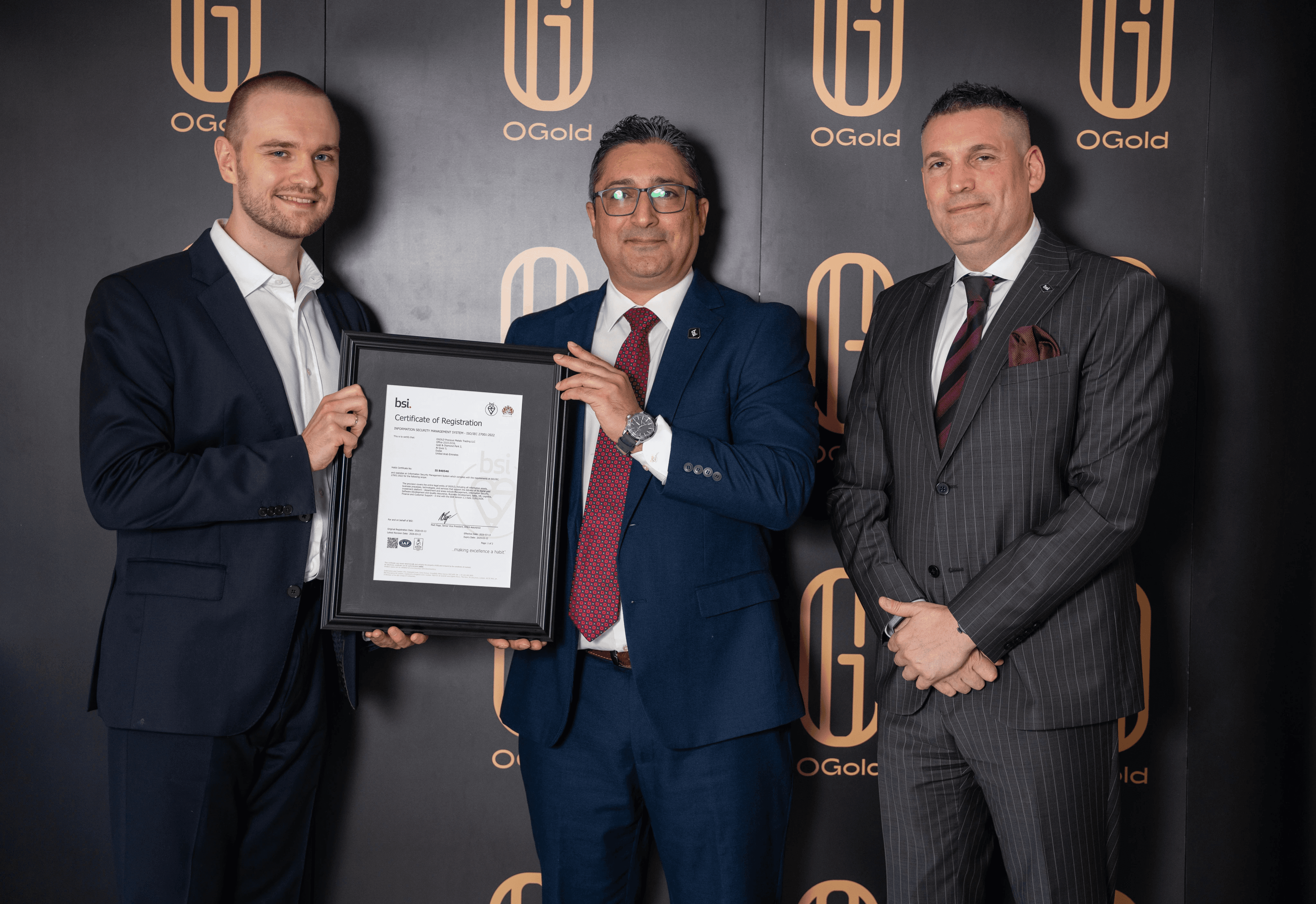
Certifications delivered inside the subscription. ISO 27001:2022, SOC 2 and PCI DSS v4.0.1 programs run inside the fee rather than arriving as separate change orders, which means an audit month costs the same as a quiet one. For what that looks like in practice, OGold went from a standing start to ISO 27001 certification with BSI in six months.
A briefed backup behind every CISO. The named CISO works in a pair. The backup knows your environment, your risk register and your open findings, so coverage holds through leave, travel, and the week your audit lands. Ask every provider on your shortlist who covers absences. The answer separates a real model from a marketing one faster than any pricing comparison.
UAE regulatory coverage with the artifacts behind it. PDPL, CBUAE technology risk requirements, VARA, DFSA, FSRA, ADHICS and the UAE IA Regulation. We publish what we know rather than claiming it: see our guides to CBUAE, VARA, ADHICS v2 and the UAE IAR, then ask any other provider for the same depth in writing.
DPO-as-a-Service in the same engagement. PDPL duties overlap heavily with security but form a distinct function. One engagement can carry both roles, which removes a second vendor and the coordination problem between them, and keeps breach notification inside the regulator's timelines while an incident is still live.
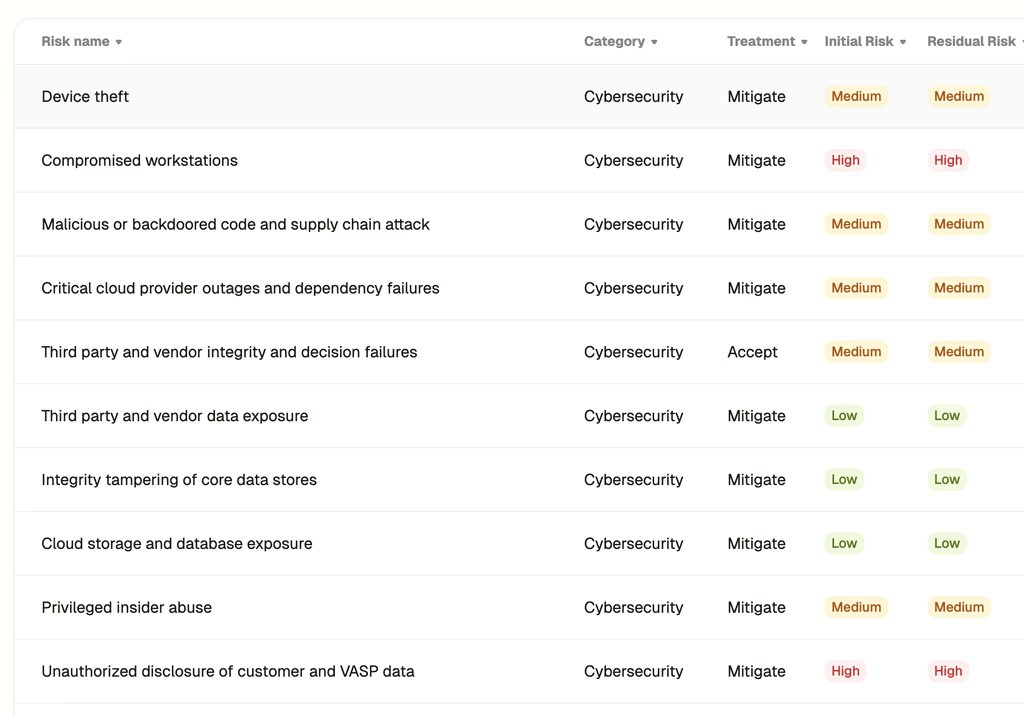
An in-house GRC platform underneath the program. Our platform speeds control and evidence tracking so the senior hours go to decisions rather than spreadsheets. The platform serves the named CISO; it does not replace them. A dashboard does not attend your CBUAE audit.
An optional 24/7 SOC, run in-house. Detection and response is available as a module rather than subcontracted to a third party, so incident communication stays on one channel with people who already know your environment. One executive cannot also be a SOC, and a SOC cannot make your risk decisions. Buy the layers you need, sized separately.
Penetration testing folded into larger tiers. Where retainer hours are available, testing comes out of them instead of expiring. Unused capacity turns into something useful rather than into margin.
Audit independence by design. We prepare you and then step aside for a separate assessor or certification body. A provider selling you both the build and the "independent" attestation is selling you a conflict of interest your regulator can flag, and an assurance you cannot rely on.
Dynova's pricing
The subscription comes in three plans, Advisor, Builder and Team, from USD 2,500 a month, published on our plans page. The plan name tells you who does the work rather than how big you are. Advisor at USD 2,500 gives you a named vCISO who sets direction while your people execute. Builder at USD 4,500 puts the build on us: direction, delivery and accountability, with a deputy vCISO for continuity. Team at USD 8,500 adds a security engineering team, a yearly penetration test and external audit representation, for the cost of one hire. Most clients sit on Builder or Team through a certification or licensing push and move to Advisor once the program runs, and we tell you when the smaller plan is enough.
You see the full price before you sign. Certification projects, customer questionnaires and board reporting sit inside the fee, so audits do not arrive as surprise invoices. The market-wide bands, including what any provider typically bills outside the retainer, are in how much a vCISO costs in the UAE.
Dynova's pros and cons
✅ A named senior CISO of record (CISSP, CISM), fixed in the contract, with a briefed backup behind them.
✅ Deep UAE regulatory coverage: PDPL, CBUAE, VARA, DFSA, FSRA, ADHICS and the UAE IA Regulation.
✅ Execution built in: Security on Demand delivery team and an in-house GRC platform on the larger tiers.
✅ ISO 27001:2022, SOC 2 and PCI DSS delivered inside the subscription rather than as change orders.
✅ DPO-as-a-Service and an optional in-house 24/7 SOC under one contract instead of three.
✅ Fixed monthly pricing published from USD 2,500, so a heavy month costs what a quiet one costs.
✅ Audit independence: we prepare, a separate assessor attests.
❌ Built for growing companies. A multinational with a 40-person internal security team and a global SOC estate has outgrown the model.
❌ The 24/7 SOC is an add-on module, priced separately from the base subscription.
❌ Not the answer if you want a single vendor for thousands of endpoints, physical security and a hardware refresh.
Best for: UAE fintech, payments, crypto/VASP, health tech and retail companies from roughly 10 to 300 staff that need a named CISO, certifications and regulator-ready security without enterprise overhead, including venture-backed startups in the Hub71 and Shorooq Partners ecosystems.
2. Help AG (e& enterprise)
Help AG is the cybersecurity arm of e& enterprise and one of the largest dedicated security services organizations in the Gulf. It runs managed security services, consulting and a deep local delivery bench across the UAE and Saudi Arabia, with the scale, certifications and vendor partnerships that large enterprise and government buyers expect.
That scale is both the point and the price. Engagement structures, procurement cycles and minimum commercial sizes are built for organizations that buy security in seven-figure increments.
Best for: large enterprises and government entities buying managed security at scale.
Keep in mind: a 40-person fintech will find the engagement model heavier than it needs, and executive-level security leadership is a small slice of a large services portfolio.
Pricing: enterprise contracts, quoted per engagement.
3. CPX
CPX is an Abu Dhabi-headquartered cybersecurity firm serving government entities and critical national infrastructure. Its strengths sit in large-scale security operations, threat intelligence with genuine regional depth, and programs sized for national and sector-level mandates.
Best for: government-linked organizations and critical infrastructure operators.
Keep in mind: the offering is calibrated to that segment. Commercial startups and mid-market companies sit outside the core focus.
Pricing: enterprise contracts.
4. Deloitte (Cyber Risk, Middle East)
Deloitte's regional cyber practice does what Big Four practices do well: security strategy, transformation programs, audits and board-level risk work for banks, insurers and government. If your board wants a brand it already knows and your problem is a multi-year transformation, this is the lane.
Ongoing security leadership is a different product. Consulting economics run on day rates and defined projects, so a standing arrangement to own your security program indefinitely gets expensive fast and tends to rotate staff.
Best for: banks and large regulated firms running security transformations or needing a familiar brand for the audit committee.
Keep in mind: day-rate math. A year of fractional CISO time at consulting rates can exceed a full-time salary.
Pricing: day rates, quoted per engagement.
5. Kroll
Kroll is a global risk consultancy best known in security for incident response and forensics. Its cyber retainers and CISO-level advisory make sense when the anchor need is response readiness: a global IR bench on call, with advisory hours attached.
Best for: enterprises that want response-anchored retainers with global reach.
Keep in mind: UAE regulatory program work (PDPL operations, VARA or CBUAE audit preparation) is thinner than the IR bench, and pricing reflects a global brand.
Pricing: global consultancy rates.
6. SideChannel
SideChannel provides fractional CISOs to US mid-market companies, drawing on a bench of experienced former CISOs. The model itself is close to what UAE buyers want: a named senior person, part-time, embedded in the business.
Geography is the catch. The bench, the compliance experience (SOC 2, US state privacy laws, HIPAA) and the working hours are American.
Best for: US companies, or UAE companies whose only regulatory exposure comes from American enterprise customers.
Keep in mind: no UAE footprint. Expect little fluency in PDPL, VARA or CBUAE expectations, plus an 8 to 9 hour time-zone gap.
Pricing: US-market retainers.
7. Fractional CISO
Fractional CISO (the company) is a US firm that helped define the category, with a strong focus on getting mid-size SaaS companies through SOC 2 and building right-sized security programs. Its public writing on how to buy vCISO services is genuinely useful reading before you talk to anyone, including us.
Best for: US SaaS companies pursuing SOC 2.
Keep in mind: the same geography issue. UAE regulatory work is not the business.
Pricing: US-market retainers.
8. Cynomi
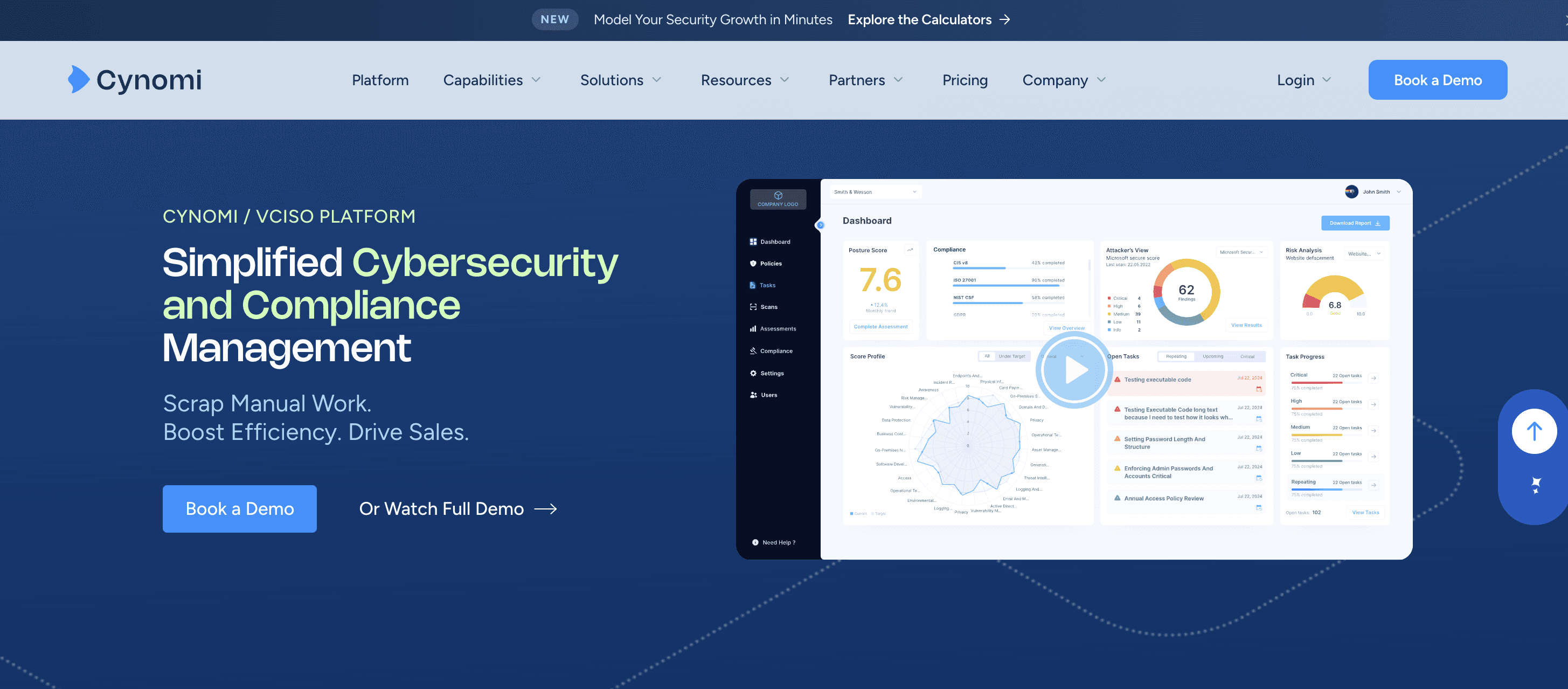
Cynomi belongs on this list for a different reason: it is a vCISO platform, software that MSPs, MSSPs and consultancies use to standardize assessments, generate policies and track roadmaps across many clients. If your IT provider offers a "vCISO service", there is a fair chance this or a similar platform sits underneath it.
Best for: MSPs and consultancies building a vCISO practice.
Keep in mind: a platform without an experienced operator produces dashboards, and dashboards do not attend your CBUAE audit. Ask who the human is.
Pricing: SaaS licensing, sold to providers rather than end clients.
What about the small local firms?
The UAE also has a tier of local consultancies and offensive-security houses that offer fractional CISO work. Full disclosure applies here too: those firms are our direct competitors, so instead of pretending to rank them objectively, we give you the tools to evaluate any of them yourself. Run the ten questions from our buyer's guide against anyone on your shortlist, including us: who exactly the CISO is, who covers absences, what UAE artifacts they can show, what sits inside the fee, and what exit looks like. The answers separate providers faster than any ranking.
How to choose: five questions that separate providers fast
The condensed version of the buyer's guide:
Who exactly is my CISO? Ask for the name and CV of the individual, who covers absences, and whether that person will sit in front of your auditor, your bank and your largest customer. "A team of experts" is a non-answer.
Show me UAE artifacts. A PDPL records-of-processing template, a VARA or DFSA audit preparation pack, a CBUAE-aligned policy set. Providers who have done the work can show sanitized evidence within a day.
What is inside the fee? Certification projects, customer questionnaires, incident hours, board reporting. Anything vague here becomes a change order later.
How do you handle the DPO role? PDPL duties overlap with security but form a distinct function. A provider who covers both saves you a second vendor and a coordination problem.
What does exit look like? You should own every policy, register and report from day one, and handover to an internal hire should be a documented process. A good vCISO expects to be replaced eventually.
Red flags: anonymous consultant pools, hourly billing for "additional questions", no UAE regulatory references, and certification promises on impossible timelines. Nobody delivers a real ISO 27001 in three weeks.
What a vCISO costs in the UAE
Full-time CISO pay in the UAE starts around AED 70,000 a month at base for a genuine CISO on the Kingston Stanley 2026 survey, and lands at roughly AED 85,000 to 120,000 a month fully loaded (about USD 23,000 to 33,000) once bonus, gratuity, visas and recruitment are counted; the full breakdown is here. vCISO retainers in the UAE mostly land between USD 2,500 and 12,000 a month (roughly AED 9,000 to 44,000), and the spread comes down to regulatory scope, whether certification delivery is included, and whether monitoring and DPO duties are bundled or sold separately; the band-by-band detail is in how much a vCISO costs.
Two commercial structures dominate. Retainers price a block of senior hours, which works until an audit month burns triple the block. Subscriptions price outcomes: the program, the certifications and the regulator interactions sit inside the fee, so a heavy month costs the same as a quiet one. Whichever model you pick, ask the provider which surprises are billable, and get the answer in writing.
FAQ
Who is the best vCISO provider in the UAE?
There is no single best, only best for a segment. For UAE fintech, payments, VASP, health tech and retail companies of roughly 10 to 300 staff, Dynova is built for exactly that profile. Help AG and CPX fit large enterprise and government-linked work, Deloitte fits Big 4 transformation programs, Kroll fits response-anchored global retainers, and SideChannel or Fractional CISO make sense only when your exposure is American rather than Emirati.
What does a vCISO actually do?
A vCISO owns your security program the way a CFO owns finance: strategy and budget, policies and the risk register, vendor security reviews, customer questionnaires, audit and certification delivery, incident oversight, and reporting to the board and regulators. The accountability matches a full-time CISO; the commercial model is what differs.
How much does a vCISO cost in the UAE?
Most retainers fall between USD 2,500 and 12,000 per month (roughly AED 9,000 to 44,000). The main cost drivers are regulatory scope (a VARA-licensed VASP needs more than an unregulated SaaS business), certification projects, and whether SOC monitoring and DPO duties are included. The band-by-band detail is in our pricing guide.
Will regulators and banks accept an outsourced CISO?
The licensed entity always stays accountable, and regulators expect a named, qualified individual who owns information security, documented governance, and board-level reporting. Outsourced arrangements are common and workable when those three things are in place. Check your specific rulebook: VARA's Technology and Information Rulebook, for example, requires VASPs to designate a qualified individual responsible for information security.
Do I need a DPO under the UAE PDPL?
Federal Decree-Law No. 45 of 2021 requires a DPO where processing involves high-risk activities, large volumes of sensitive personal data, or systematic large-scale monitoring. Many fintech, payments and health tech companies meet at least one trigger; the details are in our UAE PDPL guide. DIFC and ADGM entities follow their own data protection laws, which carry separate DPO rules.
When should I hire a full-time CISO instead?
A workable rule: below roughly 200 staff, or before you have an internal security team of three or more, a vCISO wins on cost and bench depth. Hire full-time when security work is daily, the team needs a manager on the floor, and a fully loaded cost of AED 85,000 or more a month replaces the subscription rather than adding to it.
Is a vCISO the same as an MSSP or a SOC?
No. A SOC watches alerts and responds to incidents. A vCISO decides what the SOC should watch, writes the policies, and answers to your board and regulator. Growing companies usually need both, which is why some providers, including Dynova, bundle them.
Next step
If you run a fintech, payments company, VASP, health tech or retail business in the UAE and the CISO question has landed on your desk, book a 30-minute call and put the five questions above to us first. We will tell you honestly whether you need us, a bigger firm, or nothing yet.
Related: How to Choose a vCISO Provider in the UAE · How Much Does a vCISO Cost in the UAE? · Virtual CISO vs Full-Time CISO: The Real Cost in the UAE · What Is a Virtual CISO?

Written by
vCISO and DPO (CISSP, CISM)
vCISO and DPO for UAE companies. Formerly Head of Information Security and Privacy at Equiti. CISSP, CISM.
Guide
Experience